

Palletize
Palletizing is a key logistics technique that helps you ship goods efficiently, making them easier to handle and protecting them during transit and storage.
It means grouping and organizing items systematically on a firm, flat surface, usually known as a pallet.
Steps to palletize shipments correctly
Section titled “Steps to palletize shipments correctly”- Stacking
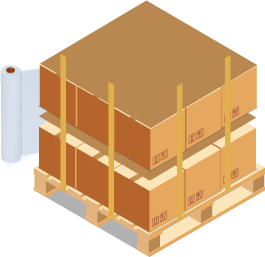
- Place boxes on top of each other so they line up.
- Use corrugated cardboard separators between each layer to support the load.
- Stack a maximum of four layers without excess weight.
- Strapping
- Reinforce pallet stability with straps.
- Secure the straps at the ends of the pallet to keep the load in place.
- Apply stretch film
- Attach the stretch film to the pallet, covering the base.
- Wrap up to the top of the stack, covering 40% with each turn.
- Add three extra wraps at the top to secure the load.
- Make sure the film covers part of the top surface so the load stays bound together.
Materials used for palletizing
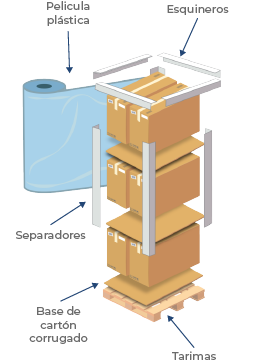
Section titled “Materials used for palletizing”- Pallet: A wood, plastic, or other frame used to transport cargo.
- Base and tops: Protect the base and top of the pallet with corrugated boxes or separators.
- Strap: Metal or plastic tape used to secure the packaging.
- Plastic or cardboard separators: Prevent layers from sliding and add structure.
- Cardboard separator sheet: Holds and protects heavy products.
- Stretch film: Holds loads in place, prevents movement, and protects against dust and moisture.
- Corner protectors: Protect edges and increase strength.
- Crate: A rigid structure that protects products from compression.
Benefits of palletizing
Section titled “Benefits of palletizing”- Faster loading and receiving.
- Fewer claims for missing or extra items.
- Lower loading and unloading costs.
- Better handling and product stability.
- More efficient use of the transport fleet.
- Better use of storage space.
Correct palletizing
Section titled “Correct palletizing”
Column

Spiral
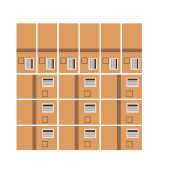
Interlock
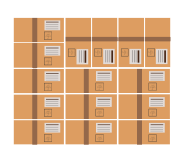
Triple interlock

Diagonal
Incorrect palletizing
Section titled “Incorrect palletizing”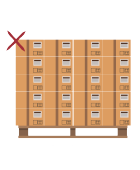
Overhang

Protrusions

Leaning
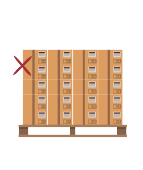
Inset load